

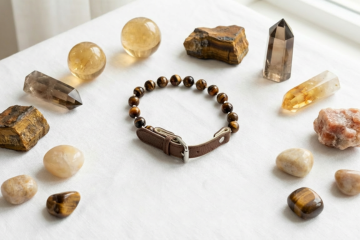


Collecting Minerals: Tips for Getting Started
A freshly unearthed rock crystal, a shimmering agate nodule, or an unassuming find with surprising structure: mineral collecting tips don't start with as many pieces as possible, but with an eye for what's special. Anyone who selects stones consciously, respects their origin, and gives them time to be identified builds a collection that has personality - and reminds them of a special place with every glance.
Collecting minerals: tips for a good start
At the beginning stands a simple question: What should your collection tell? Some people are enthusiastic about clear crystals, others about intense colors, localities, certain mineral groups, or the quiet energy of natural raw stones. There is no right collecting goal. A clear focus, however, keeps you from picking up or buying everything indiscriminately.
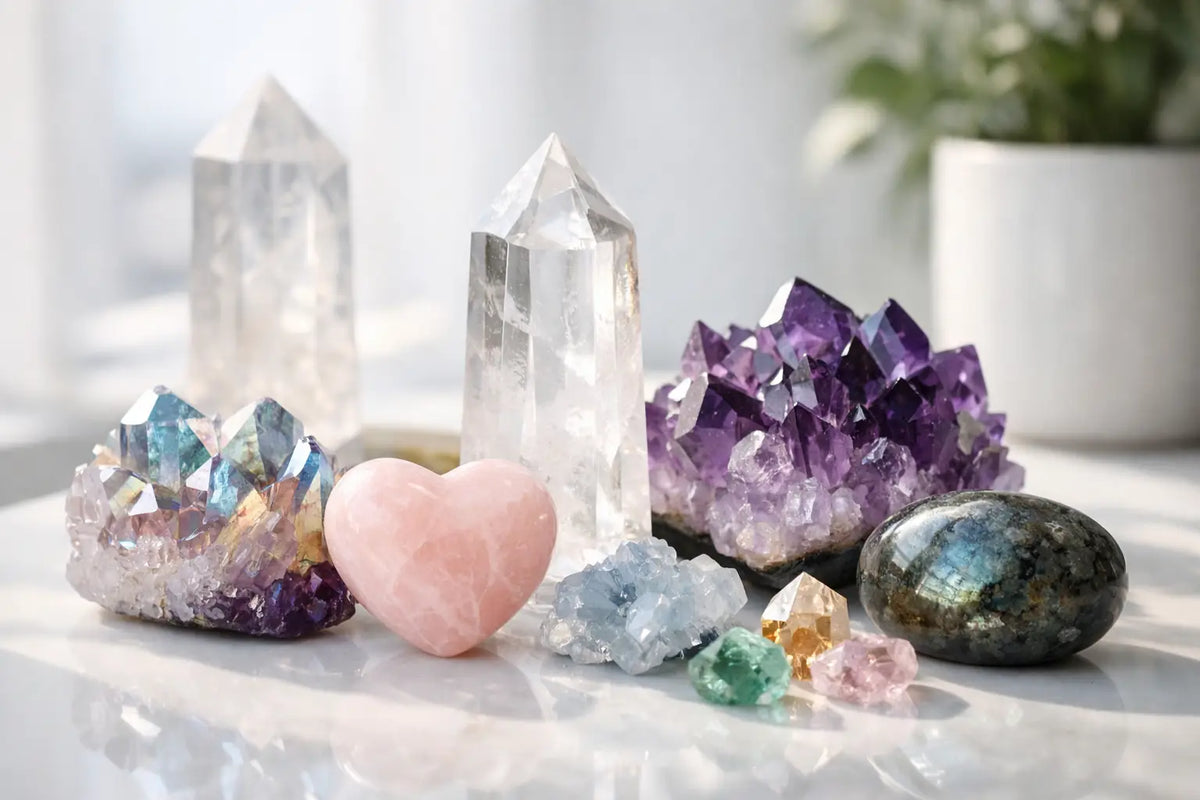
A nice beginner project can be, for example, a small collection of quartz varieties: rock crystal, amethyst, smoky quartz, rose quartz, and citrine show how diverse a single mineral system can be. Those who prefer a more geological approach collect by region or rock type. And those who value crystals as personal companions choose pieces by color, appearance, and the feeling they evoke.
Especially with energetic attributions, a mindful attitude is worthwhile: Many people associate certain stones with calm, focus, or inner balance. This effect is felt individually and does not replace medical or therapeutic treatment. As a daily ritual, as a piece of jewelry, or as a special spot in the home, minerals can nevertheless feel very personal.
Recognize quality instead of just buying size
A large piece is not automatically the better find. Pay attention to a recognizable crystal form, interesting surfaces, natural coloring, and as few fresh fracture points as possible. With specimens, the overall impression matters a lot: Are the crystals well formed? Is the matrix stable? Does the piece look harmonious, even from a bit of distance?
Inclusions, small chips, or irregular shapes are not fundamentally a flaw. They often belong to the natural history of a mineral. For pure display pieces, a clear, undamaged tip can be important. For a locality or systematic collection, rarity, origin, and typical characteristics are usually more valuable than perfect looks. What matters is always your collecting goal.
Choosing localities with respect
The most beautiful collection doesn't come at nature's expense. In Germany, you can't just dig, hammer, or take material anywhere. Nature reserves, protected geotopes, private properties, active quarries, and many waterway areas are subject to clear rules. Even small amounts can be prohibited there.
So look for permitted collecting sites, public pick-up areas, designated spoil heaps, or offers with explicit permission. On private land, ask the owner beforehand. In quarries, the rule is: collect only with official permission and under the respective safety regulations. A found piece is only a beautiful memory if its origin is clean.
For beginners, paths, streambanks in permitted areas, and loose gravel fields are often more suitable than a demanding outcrop. There you will find spectacular crystal specimens less often, but you learn to read rocks, weathering, and typical forms. Patience becomes the most important tool here: Many treasures don't lie openly visible, but only reveal themselves in detail.
The small basic equipment
You don't need heavy professional equipment to start with joy. These five things are enough for many first tours:
- a sturdy collecting bag or a backpack with separate compartments
- safety glasses and sturdy gloves, especially on gravel or rock
- a magnifying glass with good magnification for crystal faces and inclusions
- paper, pen, and small labelable find bags
- soft newspaper or cloth for wrapping delicate pieces
Documenting every find
A mineral without a find note can be beautiful. With a find note, it becomes part of a story. Write down the date of discovery, the most precise location possible, the surroundings, and notable features directly on site. Did the stone lie in stream gravel, on a spoil heap, or in a particular rock layer? Was it wet, dry, glittering, heavy, or magnetic? Such details help significantly later with identification.
Photograph the find site and the piece ideally before cleaning. A coin or a scale in the picture shows the size. If you make several similar finds, assign numbers and transfer them to the find bag, note, and photo. This may sound very meticulous at first, but it saves a lot of guesswork later.
Even with purchased minerals, details such as locality, mine, mineral name, and any treatment are valuable. Origin builds trust and turns a decorative single piece into a real collector's item. At Crystal Paradise, hand-picked natural one-of-a-kind pieces therefore stand not only for beautiful shapes, but also for appreciation of their geological origin.
Identifying minerals: observe first, then name
The desire for a quick answer is understandable. But color alone almost never identifies a mineral. Quartz can appear colorless, purple, pink, brown, or milky. Green material can be anything from serpentine to fluorite. Good identification begins with careful observation rather than a hasty label.
First look at crystal form, luster, transparency, cleavage planes, fracture, and hardness. Does the surface look glassy, silky, metallic, or matte? Does the mineral form cubic, needle-like, six-sided, or grape-like structures? A magnifying glass often reveals more than any guess.
Hardness tests should be carried out carefully, as they can damage a piece. Never test on the most beautiful visible surface and avoid aggressive methods. For valuable, rare, or uncertain finds, identification by experienced collectors, experts, or a mineral club is the better choice. Some mix-ups can only be reliably clarified with further tests.
Cleaning without losing character
Many finds only look like little masterpieces of nature after gentle cleaning. Always start with lukewarm water, a soft brush, and patience. Remove dirt gradually, dry the piece carefully afterward, and check whether its color or surface changes.
Not every mineral tolerates water, heat, or cleaning agents. Salt minerals can dissolve, soft minerals scratch quickly, and some pieces react sensitively to acids. Strong sunlight is not always ideal either: some colors can fade over time. If you're unsure, it's better to leave the surface as it is. A natural patina can be part of the find.
Separate compartments, padded boxes, or display cases are suitable for storage. Soft minerals should not lie next to harder pieces, otherwise scratches occur. Label each piece with name, locality, and date. This way, your collection stays not only beautiful but also traceable.
Buying complements finding on your own
Not every mineral can be found nearby, and some localities are long since inaccessible or protected. Purchasing from a transparent specialty dealer therefore sensibly complements your own finds. This way you can discover special specimens, rare varieties, or well-documented pieces without accepting questionable origin.
Pay attention to clear information about mineral type, size, weight, locality, and possible treatments. Naturally grown crystals may have small quirks. It is precisely these subtle differences that make them one-of-a-kind. With polished freeforms, spheres, or jewelry, on the other hand, craftsmanship often additionally determines the effect and durability.
Your collection doesn't have to grow quickly. Maybe it begins with a single find that reminds you of a quiet afternoon by the stream, and a carefully chosen crystal for your favorite spot. Give each piece a name, a place, and a moment - then, little by little, collecting becomes your very own personal connection to the earth.


Leave a comment
This site is protected by hCaptcha and the hCaptcha Privacy Policy and Terms of Service apply.