

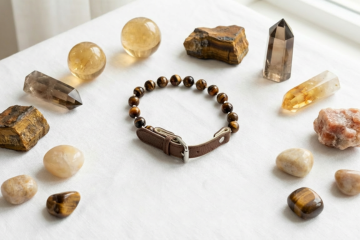


Cleaning and Charging Crystals Correctly
How to Properly Cleanse and Charge Crystals – The Complete Guide

If you want to properly cleanse and charge crystals, you often face the same question: How often is it necessary, how do you do it gently, and which method suits which stone? The short answer: Crystals should be cleansed and recharged after purchase, after intensive use, and at least every 4 weeks. The right method depends on the hardness, water resistance, and light sensitivity of the respective mineral. This article shows you step by step how to care for your stones – soundly, safely, and with joy.
Whether you just received your first bestseller crystal or already maintain an extensive collection – this guide will reliably support you.
Why Cleansing and Charging Crystals Matters
Crystals come from the depths of the earth. They go through mining, transport, many hands, and ultimately your home. In the process, they – from a spiritual perspective – gather foreign impressions and energies. But from a mineralogical point of view, regular care is also worthwhile: dust, fingerprints, and humidity can make surfaces appear dull.
In crystal healing, cleansing is considered a basic prerequisite for a stone to unfold its attributed qualities. Charging is said – according to traditional belief – to renew and strengthen the natural vibration of the mineral.
From our years of experience in the mineral trade at Crystal Paradise, we know: customers who regularly care for their stones report a more intense connection to their stones and enjoy their shine and appearance for longer.
When Should You Cleanse?
- Right after purchasing a new stone
- After intensive meditative or emotional use
- After illness in the household
- When a stone feels energetically "heavy" or dull
- Regularly every 4 weeks as a routine
The Most Important Cleansing Methods at a Glance
Not every method suits every stone. The decisive factor is primarily the Mohs hardness: the hardness scale ranges from 1 (talc) to 10 (diamond). Soft stones with a hardness of 5 or less can be damaged by water, salt, or acids.
Cleansing with Water
Water is the simplest method. Hold the stone under running, slightly cool water for 2 to 3 minutes. Then dry gently with a soft cloth.
Caution with these stones: Selenite (hardness 2), malachite, pyrite, and angelite dissolve in water or oxidize. For these minerals the rule is: never put them in water! Amethyst and rose quartz can also fade at temperatures above 40 °C.
For further care tips on individual stones, see our guides on cleansing & charging amethyst as well as cleansing & charging rose quartz.
Cleansing with Incense
Smudging with sage, Palo Santo, or frankincense is suitable for all stone types. Hold the stone in the smoke for 20 to 30 seconds. This method originates from indigenous cleansing traditions and is used worldwide in modern crystal work.
Cleansing with Sound
Singing bowls produce vibrations that, according to traditional practice, are said to dissolve disruptive energy patterns. Place the crystals in or next to a singing bowl and let it sound for 5 minutes. This method is suitable for all stones – even sensitive ones like selenite or fluorite.
You can find suitable instruments for this method in our collection: Singing Bowls – Sound Experience & Meditation.
Cleansing with Earth
Burying in earth is considered a particularly deep cleansing method. Bury the stone in clean garden soil and let it rest for 24 to 48 hours. Then wipe with a damp cloth.
Cleansing with Dry Salt
Sea salt or Himalayan salt can energetically cleanse crystals. Let the stone rest in a bowl with salt for 12 hours – without direct contact for sensitive surfaces. Dispose of the salt afterward; do not reuse it.
Not suitable for: pyrite, hematite, malachite, polished stones, and stones with metallic inclusions.
Buying Properly Cleansed and Charged Crystals – How to Find Well-Maintained Stones

If you want to buy properly cleansed and charged crystals, it pays to pay attention to quality already at the time of purchase. Stones from reliable sources arrive clean and with clear information on their origin. In our showroom in Feldkirchen near Munich, we offer you personal advice – you can hold stones in your hand, check their surface, and ask directly which cleansing method is recommended.
We recommend fully cleansing and charging new stones once before using them for the first time. This way you ensure that you start with an energetically clear stone.
For more information on our available cleansing products and accessories, see the collection Cleansing Healing Stones – How to Properly Clear Crystals.
Charging Crystals – The Best Methods
After cleansing comes charging. In this process, the stone is said – according to spiritual tradition – to regain and strengthen its natural energy.
Charging in Sunlight
Many stones benefit from direct sunlight. Place them in morning sunlight for 2 to 4 hours. Exceptions: amethyst, rose quartz, citrine, and aquamarine fade with prolonged UV exposure. A maximum of 30 minutes is enough here.
Charging in Moonlight
Full moonlight is considered a universal and gentle charging method – suitable for all stone types. Leave the stones on the windowsill or outside overnight (6 to 8 hours). The next full moon night is a good occasion to charge all your stones at once.
Charging on Amethyst or Clear Quartz
Geodes and clusters of amethyst or clear quartz are said – according to traditional practice – to cleanse and simultaneously charge other stones. Simply place smaller stones on a geode for 24 hours. This method is especially practical for jewelry and small tumbled stones.
Charging with Intention
Hold the cleansed stone in both hands. Breathe deeply, come to rest, and formulate inwardly and clearly which intention you associate with the stone. This form of activation is widespread in crystal work and requires no tools.
Detailed instructions for specific stones can be found in our care articles: Cleansing, charging & caring for labradorite and Cleansing & charging citrine.
For even more knowledge about activating your stones, see our collection: Charging & Cleansing Healing Stones – Guide.
Stone-Specific Particularities – What You Absolutely Should Know
Every stone has its own mineralogy and therefore its own care requirements. Here are the most important rules of thumb:
- Water-soluble stones (e.g., halite, selenite, angelite): Never in water – cleanse only dry or with smoke.
- Soft stones (hardness under 5): No salt, no aggressive cleaning agents, no ultrasonic cleaner.
- Metallic stones (e.g., pyrite, hematite): No salt water, no direct sunlight for more than 2 hours.
- Light-sensitive stones (e.g., amethyst, rose quartz): Prefer moonlight over sunlight.
- Polished surfaces: Wipe only with a soft, slightly damp cloth – never with brushes.
Are you interested in rarer minerals with special properties? Then discover our collector's pieces from the Urals: Buy Uvarovite – Rare Green Crystals from the Urals.
For more in-depth scientific information on mineral structures, we recommend the resources of the Mindat.org mineral database – the world's largest mineralogy database with entries on over 5,900 mineral species.
Anyone wanting to learn more about crystallography and mineral classes will find well-founded articles and further literature at the German Mineralogical Society e.V.
Frequently Asked Questions

How Often Should I Cleanse and Charge My Crystals?
As a rule of thumb: every 4 weeks as a routine, plus after every intensive use. Stones that are worn daily or used in meditation are ideally cleansed every 1 to 2 weeks. Always cleanse and charge new stones right after purchase.
Can I Cleanse All Crystals with Water?
No. Water-insoluble, hard stones like clear quartz (hardness 7), rose quartz, or agate tolerate water well. Soft or metallic stones like selenite (hardness 2), pyrite, or malachite must not come into contact with water. When in doubt, use sound or smoke instead – these methods are universally suitable.
Do I Need Special Products to Cleanse and Charge?
For most methods you don't need any tools. Running water, sunlight, and moonlight are free. For sound methods, a singing bowl can be helpful. Salt and incense are inexpensive to obtain. In our shop you'll find a curated selection of accessories especially suited for crystal care.
Do Crystals Lose Quality Through Cleansing?
No – quite the opposite. Regular, gentle care preserves shine and surface. It's important to choose the right method for the respective stone. Improper treatment – such as salt on polished surfaces or water on selenite – can permanently damage the surface. That's why it's worth

Written by Christian Neumayer


Leave a comment
This site is protected by hCaptcha and the hCaptcha Privacy Policy and Terms of Service apply.