

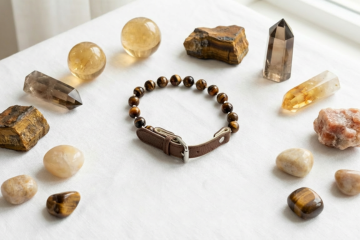


Natural Crystal versus Synthetic Crystal Compared
A crystal can sparkle in the light, feel soothing in your hand, and instantly give a room more personality. Yet between natural crystal versus artificial crystal lies more than a question of looks: it's about origin, uniqueness, collector's value, and which piece suits you and your intention.
Anyone who chooses crystals consciously usually wants to know what they're holding in their hands. Did this amethyst really grow over millions of years in a geode? Is that clear, flawless sphere rock crystal or glass? And is a synthetically produced crystal automatically less beautiful? The honest answer is: it depends on what you're looking for.
Natural crystal versus artificial crystal: what's the difference?
A natural crystal forms in the earth when minerals crystallize under certain conditions over a very long time. Temperature, pressure, water, chemical composition, and available time shape its growth. That's why every natural piece carries its own signature: fine inclusions, color gradients, growth zones, small cracks, or a distinctive crystal shape.
An artificial crystal, on the other hand, is made by humans. In everyday use, however, the term isn't always clear-cut. It can refer to a synthetic crystal that has the same chemical composition and crystal structure as its natural counterpart but was grown in a laboratory. It can also refer to glass, synthetic resin, or another crystal-like material. These variants differ significantly from one another.
A synthetic ruby, for example, basically consists of the same mineral as a natural ruby, but did not form inside the earth. Ruby-red glass might look similar, but it possesses neither the same mineral structure nor the same geological history. Anyone who values naturalness should therefore not just look for the word "crystal," but specifically ask about material, origin, and possible treatments.
Why natural crystals are so special
The fascination of a natural crystal doesn't begin with its color. It lies in the fact that it is a small masterpiece of nature. A quartz point with delicate veils, an agate with lively banding, or a rose quartz with a soft, milky shimmer can never be perfectly reproduced identically.
It is precisely these irregularities that make natural stones so valuable to collectors and people with a sense of mindfulness. An inclusion is not automatically a flaw. Often it is a visible sign of the mineral's journey: trapped liquids, fine mineral veins, or natural stress cracks tell the story of its growth.
In spiritual everyday life too, many people prefer natural crystals for their original character. Whether you attribute supportive symbolism for calm, self-confidence, or inner balance to a stone is a personal matter. No scientifically proven effects can be derived from this. As a consciously chosen companion, hand-soothing object, or ritual piece, a natural stone can nonetheless take on very real emotional meaning.
The same applies to decoration. A natural amethyst geode, a rock crystal cluster, or a polished labradorite doesn't just bring sparkle into your home. The piece creates an eye-catcher with depth, because its structures don't come from a repeatable pattern.
Artificial crystals have their own place
Artificially produced crystals are not inherently inferior. They often fulfill different desires. Synthetic gemstones can have very clear color, high purity, and consistent quality. For jewelry where a flawless look or a specific hue is the focus, that can be attractive.
Glass and crystal glass objects, in turn, are often deliberately chosen as decorative material. They refract light beautifully, can be made in many shapes, and are usually more affordable. An artfully cut glass object is allowed to simply be beautiful, as long as it's sold transparently and honestly as glass.
The decisive point is not whether a material is natural or artificial. What matters is whether you know what you're buying. A lab-grown stone should be labeled as such, glass as glass, and a treated natural stone as treated. Transparency protects against disappointment and helps you choose exactly the piece that matches your expectations.
How to recognize a natural crystal
In photos and in stores, reliable identification isn't always possible. Some natural stones are surprisingly clear, while synthetic specimens can show inclusions. Even a supposedly simple test involving scratch hardness, temperature, or air bubbles can quickly lead to false conclusions without experience and can damage sensitive surfaces.
Still, there are clues that help with a first assessment. Natural crystals often show uneven color gradients, fine growth structures, and individual inclusions. In many artificial glass imitations, round air bubbles may be visible. Very intense, perfectly uniform colors or a strikingly low price for supposedly rare stones also deserve a second look.
Be especially cautious with terms like "Aqua Aura," "Crackle," "reconstructed," "dyed," or "heat-treated." That doesn't automatically mean a piece is bad. A vapor-coated aura quartz can have a fascinating rainbow shimmer, and dyed agate is popular as jewelry or a home accessory. It's just something different from an untreated natural crystal. For a conscious decision, this information should be clearly disclosed.
For valuable minerals and gemstones, expert knowledge is indispensable. Certificates, verifiable information, and advice from specialized dealers provide more certainty than a quick online test. At Crystal Paradise, hand-selected natural one-of-a-kind pieces are the focus, so you don't just pick any stone, but a piece with character and traceable classification.
Correctly assessing origin, processing, and value
"Natural" doesn't necessarily mean "unprocessed." Many crystals are cut, ground, polished, or shaped into spheres, freeforms, and pendants. This processing often brings out color, pattern, and play of light especially beautifully, without eliminating the mineral's natural origin.
The situation is different with permanent or subsequent alterations such as dyeing, heating, irradiating, coating, or gluing small stone particles together. Here, too, there's no blanket judgment. A treated stone can be beautiful and fairly priced. For a collection where naturalness, locality, and mineralogical peculiarities matter, however, an untreated specimen is often the more fitting choice.
The value of a natural crystal therefore never depends only on its size. Rarity, color quality, crystal shape, transparency, condition, locality, and aesthetic effect all play together. A small, perfectly formed apophyllite specimen can be more interesting to collectors than a large but ordinary rough stone. For decoration, on the other hand, it's often the overall presence that decides: does the shape fit your space, does the color move you, do you want to see the piece every day?
Which crystal suits your wish?
If you're looking for a unique natural piece that makes origin and earth history tangible, a natural crystal is the clear choice. It suits collections, mindful rituals, individual gifts, and living spaces where no object should feel interchangeable.
If, on the other hand, you want a very uniform look, intense colors, or a budget-friendly jewelry and decor object, an artificial crystal might suit you well. It's just important that you don't buy it because of a promise it can't fulfill. A glass object doesn't have to be rock crystal to sparkle beautifully.
For beginners, it's often wise to start with stones that visually attract you: a gentle rose quartz, a clear rock crystal, a shimmering labradorite, or a grounding black tourmaline. Look closely, read the material descriptions, and give your feelings room. The right crystal isn't always the rarest or most expensive, but the one whose story, appearance, and meaning truly resonate with you.
Take a moment when choosing: turn the piece in the light, look at its small peculiarities, and ask yourself whether you're looking for pure nature, artful craftsmanship, or simply a beautiful accent. From this clarity, a crystal becomes a personal companion.


Leave a comment
This site is protected by hCaptcha and the hCaptcha Privacy Policy and Terms of Service apply.