

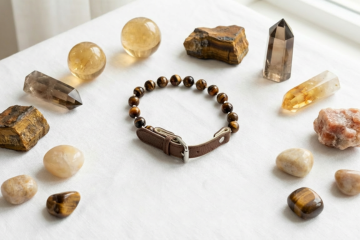


Gemstones for Collectors with Real Character
A crystal that reveals its natural structure in the light, a sparkling geode with a grown history, or a rare locality known only to a few connoisseurs: gemstones for collectors are far more than beautiful objects. They are small witnesses to the history of the Earth. Every inclusion, every nuance of color, and every crystalline edge tells the story of the conditions under which this unique natural piece was formed.
This is exactly where the magic of collecting lies. It's not just about size, luster, or rarity. A coherent collection combines knowledge, aesthetics, origin, and the personal feeling of having found exactly the right piece. Whether you're just choosing your first minerals or deliberately expanding your display case: with a clear eye for quality, every new find becomes a conscious decision.
What truly fascinates collectors about gemstones
A cut gemstone can be precise, elegant, and radiant. A natural specimen, on the other hand, feels original and unfiltered. For many collectors, this very diversity is the special joy: rough stones, crystal points, spheres, freeforms, tumbled stones, or mineralogical specimens show one and the same mineral from completely different perspectives.
A collection is allowed to be personal. Some people collect by type of stone and want to get to know the many faces of quartz - from amethyst to rock crystal to smoky quartz. Others follow localities, colors, or crystal forms. Still others intuitively choose pieces whose aura resonates with them during a particular phase of life. This emotional connection does not stand in the way of a sophisticated collection. It gives it character.
A hand-selected piece may also deliberately have edges, inclusions, or small natural irregularities. These are often not a flaw, but part of its truth. What matters is whether condition, price, and description align with one another.
Choosing gemstones for collectors: These criteria matter
Anyone who wants not just to decorate but to collect with joy and a long-term perspective should not judge a piece solely by its first sparkle. Quality often only reveals itself in the details.
Naturalness and possible treatment
Not every intensely colored stone is automatically rare, and not every alteration is problematic. With minerals and gemstones, treatments such as heating, dyeing, stabilizing, or irradiation occur, for example. Such treatments can influence the appearance and are not fundamentally negative in trade. However, they should be disclosed transparently.
For a collection with mineralogical ambitions, untreated or clearly declared pieces are particularly interesting. For crystals chosen for spiritual or aesthetic reasons, a treated specimen can also bring joy, as long as you are consciously aware of what you are buying. Honesty builds trust - and helps you realistically assess the value of a piece.
Color, crystal form, and aura
When looking at rough minerals, pay attention to clearly recognizable crystal formation, interesting growth patterns, and a color that is either typical for the respective variety or exceptionally pronounced. With an amethyst geode, a rich, vivid violet coloring can be fascinating. With rock crystal, clarity, luster, and well-formed points are often sought after. Labradorite often impresses with its shimmering play of color that lights up depending on the viewing angle.
But here too: it depends. A completely clear stone is not always more exciting than one with inclusions. Liquid inclusions, mineral combinations, or delicate internal patterns can make a specimen truly unique. Don't collect according to a rigid ideal, but according to what is truly remarkable for the respective type of stone.
Locality and origin
Origin gives a mineral depth. A clearly stated locality can be decisive for collectors because certain regions are known for particular color qualities, crystal forms, or rare combinations. A tourmaline from Afghanistan, an amethyst from Uruguay, or a rock crystal from the Alps evokes different associations than a stone without a stated origin.
Not every small tumbled stone can be fully documented with a precise locality. For higher-priced specimens, rare minerals, and exceptional individual pieces, however, as precise an origin as possible is an important quality feature. If in doubt, ask. Good advice is part of a collection that is allowed to grow.
Condition and processing
Check whether edges are cleanly preserved, whether breaks, glued repairs, or restorations are present, and whether these are openly communicated. A damaged point can diminish collector value. On a rare specimen, it can still be appealing if the color, locality, or crystal group are exceptional.
Processed forms also have their place. A sphere evenly highlights patterns and plays of color, a freeform becomes a decorative centerpiece, and a polished palm stone invites a mindful moment in everyday life. The question is not: rough or processed? But rather: which form shows the beauty of this stone most convincingly?
Starting with a clear collecting idea
A large selection can be overwhelming. Instead of buying at random, a personal guiding thread helps. Perhaps you'd like to build a small quartz family, collect rare green minerals, or focus on stones that serve as companions for calm, courage, or inner balance.
A few pieces with a clear statement are enough to start. A rock crystal as a symbol of clarity, an amethyst for a peaceful retreat, and a rose quartz for a soft, warm atmosphere already form a coherent basis. Those who prefer a more mineralogical approach can add different crystal systems, localities, or rough forms.
Keep a small collection journal or digital notes from the start. Note the type of stone, locality, purchase date, dimensions, weight, special features, and the story of why this piece came to you. For larger collections, this is not only practical. It preserves the memory of the moment when an object became your personal masterpiece of nature.
Understanding value without just looking at prices
The price of a gemstone arises from several factors: rarity, size, color, transparency, crystal quality, locality, processing, and demand all play together. A large amethyst geode is not automatically more valuable than a small, exceptionally clear, or rarely formed crystal.
Caution is advised with blanket promises that a stone is guaranteed to be an investment. The mineral market follows trends, availability, and individual demand. Those who collect solely for return quickly overlook the actual beauty of the hobby. Those who focus on quality, authenticity, and personal enthusiasm usually make the more satisfying choice in the long run.
Don't compare similar pieces only through photos. Size information, weight, and perspective significantly change the impression. With unique natural pieces, it's worth taking a close look: How does the surface appear? Is the color naturally vivid? What details are visible? And would this piece still suit you once the next trend has long since moved on?
Care: How your collection stays beautiful for a long time
Minerals don't need complicated care, but they deserve attention. Direct, intense sunlight can cause sensitive colors in some stones to fade over time. Very soft, porous, or water-sensitive minerals do not belong in a water bath. These can include, for example, selenite, malachite, pyrite, or halite - depending on the type of stone, dry, careful cleaning is the better choice.
You can gently remove dust from many pieces with a soft brush or a dry cloth. Store sensitive crystals separately so that hard edges don't cause scratches. For larger specimens, a quiet spot without constant touching, away from radiators and windows with strong midday sun, is suitable.
Those who also use their crystals energetically as personal companions can turn care into a ritual: pausing briefly, consciously observing the piece, and giving it a place where its beauty can be appreciated. Such moments don't replace proper cleaning, but they make your collection something living and personal.
Where individual stones become a collection
A compelling collection doesn't have to be perfect. It's allowed to grow with you, take on new interests, and even include surprises. Perhaps it begins with a small tumbled stone and later leads to a rare mineral specimen. Perhaps you discover your enthusiasm for localities and crystalline forms only through home aesthetics.
At Crystal Paradise, collectors therefore find not just decorative crystals, but hand-selected natural pieces with their own aura. Take your time choosing, trust your eye, and ask questions when the origin or special features of a stone make you curious.
The most beautiful place for a gemstone is not necessarily the fullest display case. It is the place where you recognize its story, feel its natural energy, and find yourself delighted anew with every glance at exactly this one piece.


Leave a comment
This site is protected by hCaptcha and the hCaptcha Privacy Policy and Terms of Service apply.